Showing posts with label Animals. Show all posts

Tuesday, August 25, 2015

Why are Male Birds more Beautiful than their Partners?

Birds are some of most beautiful animals in the world. Birds are homeotherms with feathers, wings and they reproduce with laying eggs. Also, many of them are able to fly. They look unusual, but they are group of animals which are widespread all around the world.

They live in every part of our planet and most of them are very beautiful. In the world there are around 10,000 different species of birds and every species has different feather color and different voice. It’s interesting to notice that male bird species are more beautiful than their female partners and in many cases they sing better than females. 
What is the reason for that?


Well, it’s simple. They have more beautiful feather colors in order to attract their female partner with the beauty. In many cases female birds select their male partners. 

Also, some male birds make nests for the female and decorate them with flowers. Female birds don’t need to be beautiful. Their role is to select the male partner.

Nevertheless, all birds are wonderful animals and some scientists even believe that they have evolved from dinosaurs.


 Look at some beautiful birds in the video.

Saturday, August 8, 2015

Why Do People and Animals Have Two Eyes?

The eyes are the organs which allow us and many other animals to see and perceive the environment. They are sense organs which have appeared hundreds of millions of years ago and they kept on changing afterwards.

Humans and some other animals notice the highest level of eye evolution. Different groups of animals have evolved differently and because of that they all have different shape, position and size of the eyes.
However, every animal in the world has two eyes and this is for a reason. 


Humans have two eyes to perceive depth and look better. Also, two eyes allow us to perceive the distance between the objects and ourselves.

Each of the eye gives a slightly different picture. Every eye sees a 2D picture and then these two pictures are transferred to the brain. These pictures are combined in the brain and then the brain gives us 3D dimension. Driving the car, eating or picking up things would be impossible with only one eye.


To achieve truly good 3D vision, evolution has put the two eyes to the front of the head facing forward. Some animals, like fish and reptiles have eyes on the sides of the head. This allows them to see around them in 360 degrees, thus spot the enemy. Most of them don’t 3D vision and they cannot see well.


Our physiology including the features of eye is perfect because of evolution. 

Friday, June 26, 2015

Female Kangaroos have Three Vaginas

The kangaroo might easily be the weirdest animal on the planet. Its characteristics and features like jumping, deer-looking head and caring the youngest in their pouch are very strange. But female kangaroos have one characteristic which is unique in the whole world. Namely, they have three vaginas and two uteri.

Why is that?
The complicate reproductive system can be seen on the picture bellow. The sperm always travels to the side vaginas and the joey travels to the middle vagina.


The little baby kangaroo is born 33 days after the mating. 

Then, it is very small (2cm) and after birth it stays in the pouch and feeds there for three mounts. When the little kangaroo goes to the pouch of the mother she is starting to mate and produces another embryo in the other uterus. This embryo waits and it develops only when the first kangaroo gets out of the pouch.


This process is constant and basically the female kangaroo is forever pregnant. The anatomy of marsupial doesn’t allow for a large fetus to pass through it and that is why the little kangaroo is so tiny and small when is born.
Watch the following British documentary Inside Nature Giants that discusses about the reproductive system of kangaroo.

Tuesday, June 16, 2015

Bird do moonwalk to impress the lady

In many cases, male birds are prettier and more colorful than female birds. This appearance is a result of evolution. Male birds are colorful to attract female birds.

 But sometimes, beautiful feathers are not enough to impress the lady. Some birds develop other characteristics like dancing, making the nest for the lady and collecting some things (rock, flowers). 
An example for this is the red-capped manakin which does the moonwalk to impress and attract the female bird.


  Its Latin name is Ceratopipra mentalis and it lives in tropical and subtropical forests in South America. This bird species is very small (16 g) and it eats only fruits. 
Now, see the Michael Jackson copy-cat in action.

Friday, June 12, 2015

25 Animals which are Masters of Camouflage

Animals which are hiding from enemy must develop some new morphologically characteristic which allows them to dovetail in their environment. This appearance is called camouflage.

Animals change colors to look like the background, or develop some features to look like leaves, branches or stones.


In a way, all animals use camouflage, but some of them do that so well that it makes them almost invisible.


Animals have to go through a long period to come to that stage of camouflage.


Species use camouflage to hide from predators or to hide from prays so that they could catch them. This is an awesome phenomenon in nature. Look at the video bellow and try to find the animals.

Thursday, June 4, 2015

There Is a Spider That Makes Somersaults

We have been convinced many times that human can make acrobatic flic-flac movements. But, not many people know we are not the only species that can make this gymnastic movement.


This spider has been discovered in 2008 and is native to Morocco.
 Its Latin name is Cebrennus rechenbergi and it is also known as the Moroccan flic-flac spider.

This spider moves with a unique mechanism. It uses rolling movements to escape from and confuse the enemy. 


Also, this movement helps the spider reduce touching the hot sand. The flic-flac spider feeds and reproduces as the other dessert spiders. It lives in the dessert and it can move with a speed of 2m/s.


Its unique movement has inspired some scientists to make a robot which moves with flic-flac movement. This robot is long 25 cm and it can be used for exploration of the ocean floor or even Mars. Look at the rolling movement of this interesting spider.

Tuesday, June 2, 2015

Unique Glass Frogs with Transparent Skin

These species of frogs belong to the amphibian family of Centrolenidae. The skin of this interesting frog is lime green, but some species in the family have transparent skin on their abdomen.


 The structure of the skin allows the light to pass through it. 
Because of that, we can see all of their internal organs, including the gastrointestinal tract, the liver and the heart. 
The name of these species of frogs comes from their abdominal skin. Glass frogs are generally small (3-7 cm). 


They are known for their act of eating their offspring. Glass frogs are native to South America and they live in the rain forests on this continent. Look at the following video about glass frogs and see how the heart of a frog works. 

Friday, May 22, 2015

The Weirdest Types of Sharks in the World

When we think about sharks, we immediately think of a picture with great white shark. In the seas and oceans around the world there are many species of sharks. They are different in their looks or sizes. Some of them became very famous, but many of them are completely unfamiliar for us. These are five species of shark that everyone should know.


1.Cetorhinus maximus
Cetorhinus maximus is second largest shark in the world, right after the whale-shark. They are 7-8 meters long. The biggest one found was 12 meters long. This species of shark has very large mouth (1 meter in diameter) and it feeds with phytoplankton, shrimps and small fish. They have their mouth opened to catch little prey.


2.Isistius brasiliensis
This species of shark is also called cookie cutter because it bite pieces from the prey and spins around in the same time. It is 50 centimeters long and it has a habit of biting whales, humans and even submarines.

3.Alopiidae
This is one of the strangest sharks in the world. That is because they have very long caudal fin. It uses its long fin to attack the prey. It is also called fox-shark and its caudal fin can be long as the body of the shark itself.

4. Megalodon
Megalodon is considered to be the biggest shark which lived in the world. It is extinct for 2 million year ago. This predator grew up to 20 meters and because of that it was the king of the oceans. The word megalodon means “large tooth”. Its teeth was nightmare for whales and other fish which lived in that period.


Mitsukurina owstoni –goblin shark
Goblin shark lives in the deep waters around Japan. It is very rare to see this species and the scientists can’t discover more about their life. This is a species of shark which has not changed for 100 million years and because of that it is called a live fossil. The long nose looks like a goblin’s and the name is comes from that strange nose. Inside in nose the shark has canals which helps it find food. The body of the animal can be up to 11 meters long.


Thursday, May 21, 2015

Incredible Hybrid Animals around the World

Hybrid animals have evolved after mating of two related, but different species. The hybrids gain characteristics and traits from both of the parents. 


Their names are a combination from the names of their parents’ species. In the world there are many interesting hybrids animals, suchas: 

 Except these, there are many more interesting animals that are hybrids in world. In the video you can see the some of the existent hybrids animals.

Saturday, May 16, 2015

Ants have toilets in their nets

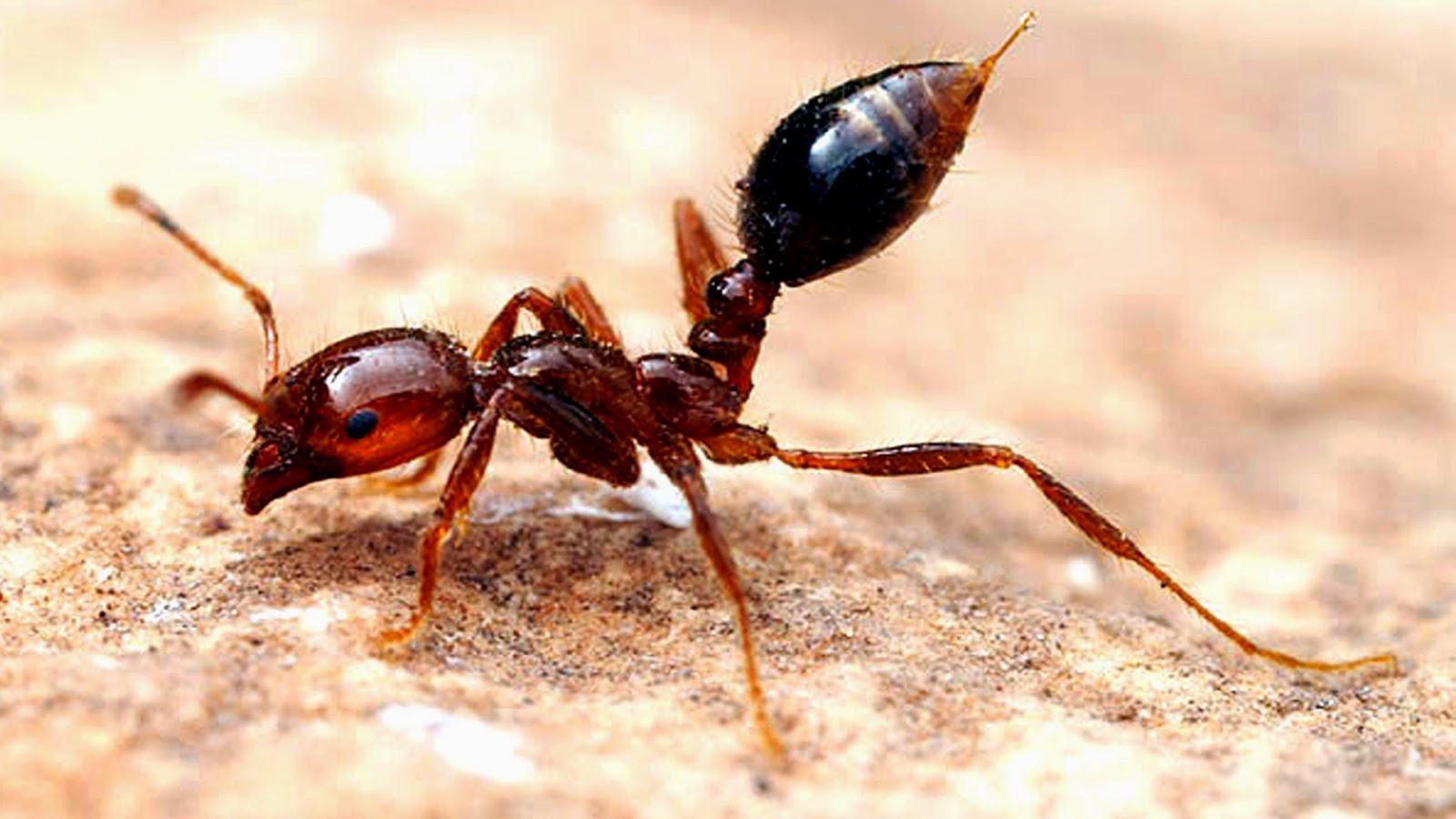
Ants are colonial and working insects. That’s a proof that these small insects are very intelligent and witty.  But the discovery that they have toilets in their nests is very groundbreaking.


Scientists explored black garden ants. In their food (sugar solution), they have put food coloring. Some of the ants were eating only red food and the others only the blue sugar solution. So, when a blue ant defecated, its feces was also blue. 


After two months, scientists started to notice the coloring dominating in specific places in the nests. The colors could be identified in the corners of the nest.

Why? Apparently, the ants make toilets in their nests to protect themselves, the food and the larvae. Their feces contain dangerous bacteria and transmit diseases.


The ants that move around in environment defecate outside. However, in the colonies, there are ants that can’t go outside and because of that they are have to choose one place when they would defecate. This is a genius solution for protection of the colony from diseases and other dangers. 

Friday, May 15, 2015

Ten Indestructible Animals That Live on Earth

Shellfish, turtles, sea monsters and worms - these animals are famous for their gift for regeneration and adapting to environment. Their life span is couple of centuries.


 In this video you can see 10 incredible animals that live in the most improbable places on Earth. In the end you may think: Is human really the most ideal organisms on Earth?

Monday, May 11, 2015

Unknown Facts about Snakes

In the world there are more than 3000 species of snake. They live on every of the continents, except Antarctica. Snakes are famous for their long and thin bodies.
All organs on the snake have adapted to their unusual bodies. Snakes lost their legs with evolution.


Snakes are animals that are usually colorful and their dimension is different for every species.
The smallest snake in the world is Barbados threadsnake, which is 3.9 inches (10 centimeters) long. The largest snake is python and it can grow 30 feet (9 meters).
The largest fossilized snake which was ever discovered was 15 meters long.


About 70 percent of the snake reproduce laying eggs and the other 30 percent reproduce like mammal. Some snakes give birth to their young like mammals because of the climate where they live in. If the climate is cold eggs can’t develop and hatch and in low temperatures.
Snakes are carnivores. They swallow their prey. They can swallow pray 100 percent bigger than them. To do that snake must unhinge their jaw.


Snakes have very slow metabolism and because of that they don’t hunt often.
Snakes have very strong enzymes in their stomach which digests all prey.
Snakes are ectothermic animals and they can’t regulate their own body temperature.


Snake don’t smell with their noses, like humans. They have split tongue and they use it to smell and taste the chemical compounds in the air. Many of the snakes have poison glands on the base of their teeth.


The eyes of the snake do not move.
Also, snakes don’t have auricles.


Snakes change their skin as they grow. They shed their skin three times per year. This is called molting.

The rarest species of snake is St. Lucia racer. In the wilderness there are only 18-100.

Saturday, May 9, 2015

Why Don’t Fish Float or Sink?

All animals in the world sink when put into water except fish. Why is that?


Fish are animal which have adapted to life in water. They are able to move in water, of course. Their body density is slightly smaller than the water in which they swim. Because of that, they are like the water itself and they do not sink.


But what about floating? To stop themselves from floating fish use one unique organ called swim bladder (also called air bladder or gas bladder). That is an organ full of air. The organ’s membrane is full of capillaries. The function of the air bladder is helping fish balance themselves. Fish balanced themselves in the water filling and emptying the air bladder. When fish float intentionally, the air from the bladder transfers into the blood and is being released from the gills. The opposite thing happens when fish sink into water. This happens constantly.  


However, some species of fish don’t have air bladder. These fish always have to swim or they would sink. Fish use the same method as airplanes in this case.

Wednesday, May 6, 2015

You Can’t Find Smaller Mammals than These

Mammals are animals which feed with milk from their mother after birth. In the world there are many different species of mammals. Every species of mammals, from smallest to largest, have this same single characteristic. The smaller mammals usually live under the surface or they hide under the leaves and grass. They feed with insects or plant fruits. These are the smallest species of mammals you could find in nature.


Pygmy jerboa (Salpingotulus michaelis).
This small mammal is native to Pakistan and Afghanistan. Pygmy jerboa weighs 3 grams and it is the smallest rodent in the world. It looks like a hybrid between mouse and baby kangaroo. In the world there are 25 different sub-species of this small rodent which live in Central China and Asia.


Bunblebee bat (Craseonycteris thonglongyai).
The smallest mammal in the world is Bunblebee bat and their weight is only two grams. Adults forms are 1.3 inch long. This species has been discovered in 1974 by zoologist Kitti Thonglongya. It can be found living in the limestone caves in western Thailand and south-east Myanmar.


Pygmy opossum (Cercartetus nanus).
Although it looks like chinchilla more than a kangaroo the pygmy opossum belongs to the marsupial family. The pygmy opossum belongs to the same group of animals as koala and Tasmanian devil. It weighs 10-45 grams and although small it has the same features as the normal opossum. It has tail which the animal uses to descend from trees. This species can be found in Australia, Papua New Guinea and Indonesia. In one period of the year (during winter), pygmy opossums roll into balls to hibernate.


There are many more small and interesting mammals in the world. Many of them evolved to have smaller bodies to protect themselves from their enemies and reproduce better.


Saturday, May 2, 2015

Nature is Amazing – Wasps That Look Like Pandas

This charismatic ant was first discovered in 1938 in the central coast of Chile, where it can be found even now. This interesting species of ant it’s not an ant, actually, but it belongs to a group of insects called wingless wasps. It is also known as Euspinola militaris and it’s called panda ant because of its look, which resembles those of a panda bear.


They are very active insects. Panda ants feed with nectar and because of their specific diet they must always change their habitats. One mature panda ant is 8 millimeters long. An interesting think about them is that they exhibit extreme sexual dimorphism. Because of that, scientists can’t easily tell apart between males and females. The only thing that makes them different is their size, namely the male is greater.

After mating, female panda ants are laying eggs, which later results in a larva. When the larva is fully grown it becomes panda ant.


Panda ants live around 2 years, which is a long lifespan for a small animal like ant. They’re cute for a wasp, but don’t let their looks fool you to take them in your hands. Their stings cause intense pain. Their bright colors show other animals that they’re dangerous and venomous. 

Friday, May 1, 2015

Have You Heard Of These Awesome Animals?

Maned wolf.
The Latin name of this species is chrysocyon brachyurus and it lives in open or semi open habitats mostly grasslands. Many people think that it’s a fox, but this animal is not a fox, or wolf. The maned wolf is a species between fox and wolf. It lives in Brazil, Argentina and Paraguay and it feeds with small prey animals (rabbit, birds).


Tufted deer.
The tufted deer (elaphodus cephalophus) is a small species of deer characterized by a prominent tuft of black hair on its forehead. Living in central China and Myanmar, it has a lifespan of 10-12 years. Also, this small species of deer is characterized by its teeth. It has a good hair style, you must admit.


Dugong.
Dugong (dugong dugon)is a medium large marine mammal. This animal feeds with sea grass (sea-cow) and it lives in the Indo-west Pacific. Dugong is animal with a long lifespan, and the oldest recorded specimen reached age 73. They are social animals and live in groups.


Japanese spider crab.
Japanese spider crab (macrocheria kaempferi) is a species of marine crab that lives in waters around Japan. This animal has a biggest leg span among anthropodes. Their leg span reaches up to 3,3 meters. They weigh up to 18 kilograms. They feed with dead animals and reproduce with eggs.


Okapi.

This animal lives in central Africa. Although it has stripes, the species is closer to giraffes than zebras. Its Latin name is ocapia johnstoni. The okapi and the giraffe are only living members of family giraffidae. 

Tuesday, April 28, 2015

Why Do Sea Turtles Cry When They Lay Their Eggs?

Sea turtles also called marine turtles belong to the superfamily of Chelonioidea. In the world there exist many species of sea turtle. The largest sea turtle is the leatherback turtle which weighs around 500 kilograms (the largest leatherback recorded weighed 916 kilograms). Their color is different between the species and they can be olive-green, reddish- brown, yellow or black.


Turtles are characterized by their large shells. One turtle shell is made of bones including ribs, which moved above the organs with evolution (in many species they have moved under and above in the same time) and between the bones there has formed a compact shell which turtles use to protect themselves from the enemy.


Female and male sea turtles are equal in size. All species of turtles reproduce through laying eggs. Sea turtles are laying their eggs on sand every year in a same place. The small turtles come out of the sand and they are on its own from then on.


In the process of laying eggs scientists have observed tears coming out of turtle’s eyes. However, that doesn’t mean sea turtles are crying. The tear is a result of a process through which turtles get rid of the excess of sea salt.
The same process is happening in the water, too but there we can’t see the tears.


It’s interesting to know that many of the sea turtles are omnivores, but there are some species, like the green turtle, that are herbivores.

Sea turtle exist for around 110 million years, but the negative effect of human makes them a endangered species now.