Showing posts with label Physiology. Show all posts

Saturday, August 8, 2015

Why Do People and Animals Have Two Eyes?

The eyes are the organs which allow us and many other animals to see and perceive the environment. They are sense organs which have appeared hundreds of millions of years ago and they kept on changing afterwards.

Humans and some other animals notice the highest level of eye evolution. Different groups of animals have evolved differently and because of that they all have different shape, position and size of the eyes.
However, every animal in the world has two eyes and this is for a reason. 


Humans have two eyes to perceive depth and look better. Also, two eyes allow us to perceive the distance between the objects and ourselves.

Each of the eye gives a slightly different picture. Every eye sees a 2D picture and then these two pictures are transferred to the brain. These pictures are combined in the brain and then the brain gives us 3D dimension. Driving the car, eating or picking up things would be impossible with only one eye.


To achieve truly good 3D vision, evolution has put the two eyes to the front of the head facing forward. Some animals, like fish and reptiles have eyes on the sides of the head. This allows them to see around them in 360 degrees, thus spot the enemy. Most of them don’t 3D vision and they cannot see well.


Our physiology including the features of eye is perfect because of evolution. 

Monday, July 13, 2015

Why Do Men Have Beard and Women Don’t?

Men and women have many different characteristics. One of the characteristic that defines man is the beard. Beard is all the hair that grows on the chin, upper lip, cheeks and neck.  

 Why do men have beard and women don’t? The answer of this question is hidden deep in the human brain.
There is a part of the brain called hypothalamus that sends signals to the pituitary gland. 


In the puberty age of every human this gland sends more signals to the gland underneath this part of the brain. 

The pituitary gland sends signals to ovaries (girls) and testicles (boys) to produce more sex hormones.
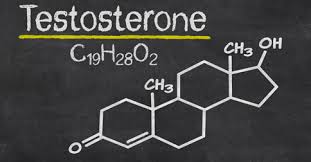
The male reproductive organ produces hormone called testosterone and the female ovaries produce estrogen.
 Then the testosterone sends signals to start the changes and after that changes the human body gets its final shape. 
So testosterone is the reason why men grow beards.


Some females have problem with this appearance. That happens when the testosterone level in females is high. 


Sunday, June 28, 2015

Take a Look inside the Human Heart

The heart is the most important organ in our body. Its function is to pump the blood to the veins, arteries and vessels. Would you like to see how does it work? Now you can.

Scientists from the University of Tokyo created this new heart simulation. 
With this new technique you can go inside the chambers of the heart and see how you heart is working. 
In this video you can see the way heart pulses and its contractions.


The researchers hope that such model would help doctors do better treatments and surgeries in the future. Look at the nature’s most incredible machine.

Monday, June 22, 2015

Why Are Veins Blue and Blood Red?

Blood is very important for the normal function of the human body. Their function is transporting the different substances and gas to each cells or group of cells. Hemoglobin gives the blood its color.

 It is found in the red blood cells and some percent of it dissolves in the blood. Its function is to transport the oxygen to cells and eliminate the carbon dioxide through lungs.
Using the veins, arteries and capillaries blood successfully does its job. Veins always transport blood which has low amount of oxygen (deoxygenated blood) and arteries transport oxygenated blood.


Deoxygenated blood is darker than the oxygenated blood.

 The red colors absorb red wave light more so it is less visible. So this is an optical illusion because the red color is close to blue in the specter and our brain detects this color as blue. Purple blood might absorb much of the red light and the blue light is reflected from the veins and we see the veins as blue.
 Now you know why your veins are blue – it is a simple optic illusion.

Thursday, June 18, 2015

Humans Have More Brains – How Many?

Everything we see, hear, touch or feel is a creation of our nerve system. The main laboratory of the nerve system is the brain. The brain is the most important and wonderful organ in the human body. Without this amazing organ, probably we couldn’t evolve or develop everything we see. In physiology the brain is referred to as central nerve system (nerve system in cranium).


The central nerve system is made from 5 different parts or brain: hindbrain, midbrain, small brain, interbrain and forebrain. The medulla oblongata is in the lower back part of the cranium. The most important vital function is in the hindbrain. 
The center for respiration, hearth work, sweets, sneeze, cough, puke are founded in the hindbrain.
In the middle of the central nerve system there is the state midbrain. 


Its function is to regulate the muscle reflex and keep the muscle tonus of skeleton musculature. 


Bellow the main brain there is the cerebellum. This brain also has two little hemispheres.
 Although very small it contains 50 percent of all nerves in the central nerve system. Inside this part there is the center of poise and nicety. We can’t walk without the small brain.


The interbrain is made from thalamus, hypothalamus and subthalamus. These three parts regulate some of the most vital functions in the human body (angst, thirst and happiness). These parts produce hormones which are very important for the normal function of the body. 


This brain is connecting the endocrine system with the nerve system and because of that it is very important.
The forebrain is biggest of all brains which all of us have. The apogee of evolution is developing the forebrain and cortex.


 The cortex is a part which takes the signals from the body, elaborate and deliver them to some parts of the human body. This process happens in part of a second. 

Also, inside this part are the centers for memory, ear, stimulation, speaking and everything you can imagine in the moment. Without the cortex we couldn’t think and without the cortex life wouldn’t exist. Every animal that has a brain also has a cortex, but humans have the most developed cortex.

All of these parts work together in a perfect way.

Sunday, June 14, 2015

Spermatozoids Nearly Always Move To the Right

Spermatozoids are male reproductive cells. They are small and agile cells which can cross a very long distance in just a second. Because of that, following each spermatozoid is impossible.


Three years ago scientists discovered a technique for following the movement of every spermatozoid. 
They used a lens-free chip imaging technique that can track the three dimensional (3D) trajectories of more than 1,500 individual human sperm cells.


 This technique was published in PNAS science journal.
With this 3D technique scientists discovered that 5 percent of spermatozoids have helical movement. Nearly 90 percent out of these 5 percent have right-handed helical, i.e. they move to the right

Scientist don’t know why spermatozoids move that way.

The same technique can also be used in researching microorganisms or drug testing.

Sunday, June 7, 2015

This Is the Reason Why We Have Eyebrows

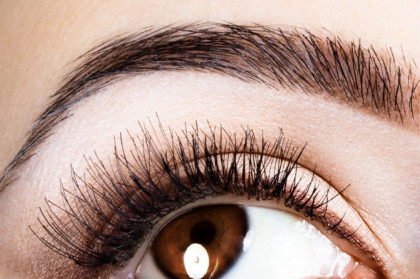
Humans are characterized by their looks. Among other details that make us unique among other animals are the eyebrows. We are born with them and we have them until the end of our lives.


 They come in many forms and colors: dark, light, tiny, thick. 
The eyebrows are an important part of our looks. Why?
It’s simple. Eyebrows are important for our eyes. 
They keep the moisture and sweat from getting to the eyeballs.


 Without eyebrows, the sweat would be irritating the eyes constantly.


These little hairy parts have evolved with time.  When early humans have been running away from the enemy, the eyebrows kept the sweat from getting to the eyes and helped them run away faster.

So the eyebrows have evolved to protect the eyes, but also to give people a better look.


 See the video for more information.


Friday, May 29, 2015

Why Does Hair Turn White or Gray?

The hair is a product of the skin and it’s made from millions of tiny fibers. In the center of every hair fiber there is something called follicle. There is melanin in every follicle of hair. Melanin is a pigment which is produced from cells called melanocytes.

Many humans have dark hair. Hair has only two types of pigments: dark (eumelanin) and light (phaeomelanin). 
They blend together to make up the wide range of hair colors. 
After the 30th year, human hair begins to turn white or gray. 
This happens because of the reduction of the melanin pigment in the hair follicle.


Hydrogen, which brunettes used to become blonde, is a perpetrator of this effect.

 Human body is constantly producing hydrogen in small quantities. It’s a product of a chemical reaction in the metabolism. 
Younger people successfully eliminate this compound. The elderly humans can’t eliminate hydrogen from the body like younger people.

When hydrogen is completely free in the body, he is blocking the enzyme called tyrosinase. 


This enzyme is necessary for producing melanin from the melanocytes. 

Thus, the hair of older people becomes grey or white.


Scientists believe that in the future we’ll have drugs for blocking the hydrogen or for activating the melanocytes to produce melanin again. Before that, the only option is using the mentioned perpetrator for dyeing the hair.

Sunday, May 24, 2015

Why Do Our Fingers Get Wrinkled in Water?

If you hold your fingers in water for 30 minutes, the skin on the fingers will get wrinkled. Every one of us has had the experience.


In the past, the explanation for it was that it happens because of the process called osmosis. 
Osmosis is a spontaneous net movement of solvent molecules through a semi- permeable membrane into a region of higher solute concentration.


However, modern scientists doesn’t agree. They say that the wrinkled skin is not a result of osmosis. Instead, it is a reaction to our autonomic nervous system. 


This system also controls breathing, heart rate and perspiration.
 In fact, the distinctive wrinkling is caused by blood vessels constricting bellow the skin. 
We can feel surfaces that we touch better with our wrinkled fingers in moist conditions.


This is a result of evolution. The wrinkling has first appeared to our predecessors. When they hunted fish their brain started adapting in order for the fingers to get better grip in the water.


Why isn’t our skin getting wrinkled permanently?

Scientists believe that the wrinkling would damage our skin if permanent. See the video for more information about this interesting appearance. 

Tuesday, May 19, 2015

The Human Brain Can’t Make a Difference between Chocolate and Cocaine

The brain is one of the biggest and most important organs in our body. Inside the brain there are many different regions identify numerous of compounds that enter the body.


 Great amount of compounds that come inside the body enter through food.
 Glucose, fats and proteins are most present.
When we consume food then the tongue sends signals to the brain. The brain processes the signals and sends them to other organs or other regions of the brain.


But the number of compounds we consume is enormous and because of that the brain has places for different group of compounds. In many cases, we eat for pleasure. Our brain needs only glucose or fat. 

The brain region for pleasure reacts when glucose enters inside us and then we are satisfied.
But scientists have discovered that the human brain can’t make a difference between glucose and drugs.
 Glucose looks the same as drugs to our brain because they’re both addictive. 
The brain reacts equally to these two compounds.
Glucose and drugs affect the pleasure region. 


When consuming food, our brain gives the body order to take sweet food, and because of that we want to eat chocolate more than carrots.


That is one of the reason why 2.8 million people die from obesity every year. Next time your brain orders you to have something sweet, don’t listen to it. 

Thursday, May 14, 2015

All Men Have Been Females at the Beginning

Men can’t produce milk or give birth. Then why do they have nipples? Why the magic of evolution didn’t get rid of man’s nipples? To respond this question we must go back when the fetus is being developed.  The fetus has no sex to their 8th week. So all fetuses are equal to their 8th week and during this period we see secretion of compounds who would later determine the sex.


The sex of one person is finally determined during the process called fertilization. If the Y chromosome is present after the fertilization, then the fetus is male. Y chromosome activates in the 8th week of the pregnancy. Then the fetus starts secreting testosterone, which is a hormone.


This hormone give orders to the organs to develop into male sex organs. Penis starts to evolve from the clitoris. Ovaries go down and they are develop into testicles. The nipples remain developed but the breast don’t start to develop. So the nipples are leftovers from the fetus’ ventures in their mother’s stomach.


In the first few weeks of the pregnancy, every fetus passes through the female stage and after it, the Y chromosome is crucial for determining the sex. If the Y chromosome is gone, then the fetus develops into female.

Sunday, May 3, 2015

Why Do Humans Sneeze And Cough?

Every human on Earth sneezes or coughs sometimes. Do you know why your body uses these two physiological mechanisms?


Sneezing and coughing are two normal physiological occurrences in our body. Our organism uses sneezing to eliminate some unnecessary particles or microorganisms from the body into the environment. In many cases this happens when our bodies are attacked by allergens, viruses, bacteria.
If there is big concentration of slime in the nose (contain numerous bacteria), then the center for sneezing is activating. That center transmits signals to the diaphragm and the muscles which are around the lungs. Then, the diaphragm and other muscles are starting to contract very fast. Air comes out of the lungs and slime comes out from the nose very fast. This is happening for less than one second and the speed of it is 160 kph.


While we’re sneezing, our eyes closed reflexively. There is a theory that our vital organs stop functioning in the moment we’re sneezing, but it isn’t correct. The heart and the other organs work normally while we’re sneezing.


However, stopping the sneeze can be bad, since we could get injured then. I’m referring to injuries like tearing the veins in our eyes or cause problems with the diaphragm.


The coughing is a similar method and our body uses it when it needs to get rid of some particles from the throat, windpipe or lung. In this case the working of the muscles and the diaphragm is little different from the sneezing. The center of coughing is found in medulla oblongata (the elongate brain).


So, my advice to you is: If you must sneeze, do it because the sneeze can do only good to your health.

Thursday, April 30, 2015

What Do We Listen When We Hear The Ocean Through A Shellfish?

Walking by the ocean is always a pleasure. A greater pleasure is when you find big spiral shellfish in the sand and if you can hear the ocean through it. But shellfish are small to hold all of the water from the ocean. Then what’s the sound that we listen from it?


Actually, we listen the sounds from our environment. The inner part of the shellfish have a structure that allows it to reflect the sound waves in a specific way. As the sound waves are passing through the interior structure of shellfish the frequency is changing and the result is a sound similar, or often the same, as the sound of waves or the ocean.


You’ll realize that there are no sound when you listen to the shell in a quiet environment, for instance a closed room. So you need the sound from outdoors to “listen the ocean” in a shellfish.
But all of this is also related to our brain. Shellfish always produce different sounds, and our ears are influence by many sound waves with different frequencies. The ear, together with our brain, recognizes a different sound coming from the shell. Then, the brain detects only the sound we are focusing on and the sound that we want to listen. In this case, the brain is trying to detect new sounds and because you are close to ocean (or shellfish remind you to the ocean), it gives you the desired sound subconsciously.  


According to this theory, our own brains lie to us regularly. And it’s true. But after all, you get the chance to enjoy the ocean without getting into it, so that’s something. 

Thursday, April 16, 2015

The Biggest Organ In The Human Body

The human body consists of cells that organs are made of. All of them together form one organism. The human body is made from many organs which have different function, volume and position in the body.


Do you know what’s the biggest organ in your body? No, not the lungs. Not even the brain. The biggest organ in the human body is the skin.
Skin is one of most important organ in our body. Without skin, the water would evaporate of the body much faster.


Skin is made of many types of cells which have their own function accordingly. A square inch of skin has 650 sweat glands, 20 blood vessels, 60,000 melanocytes and more than 1,000 nerve endings on average. The human skin is made of three layers: epidermis, dermis and hypodermis. Hair grows in its base.


The skin of average person weighs about 8 kilograms.
The skin isn’t there just for keeping us safe from evaporating. Other functions of skin are:
-          Protection. It is an anatomical shield that protects us from pathogens and other dangers in the environment.
-          Sensation. It contains a variety of nerve endings that react to heat and cold, touch, pressure and tissue injury.


-          Heat regulation. The skin has many blood vessels which expand when the body temperature is high, thus releasing the heat from the body. Also, the skin has sweat glands which controls the body temperature through water evaporation. The heat is being released with the evaporated water.


-          Excretion. Most of the glands are releasing unhealthy compounds from the body, such as urea.
.
-          Synthesis. Skin produce vitamin D by action from UV  and she is a storage of lipids and water.
It is interesting to know that the color of the skin is determined by the pigment called melatonin, that produces malanocytes and other compounds such as carotene and hemoglobin (red color skin).


Finally, skin is an awesome organ because it’s able to regenerate itself after injuries. Of course, bigger injuries could cause greater damages and could be fatal. 

Tuesday, April 7, 2015

One Trick Will Allow You to Drink Without Getting Drunk.

The alcohol is an organic molecule which is mostly a result of the process of fermentation in some fruits. It can be also formed with a chemical reaction or wood distillation.


Many drinks have different percentage of alcohol. People have consumed alcohol for a long time.  I don’t have to tell you that alcohol is destructive for your health, especially the liver, you already know that.
After you drink alcohol, it is absorbed in the stomach and then transferred in the blood. Because of this, its effects are very prompt.


There’s one trick that you can use to drink a lot without getting drunk. All you need for this trick is cooking oil. Few hours before, drink one glass of oil. The oil will overlay the stomach, thus preventing the absorption in the stomach. You should drink the oil on an empty stomach.

I’m sure all of my fellow scientists have already used this trick. It’s genius, don’t you think?

Sunday, April 5, 2015

What's the Secret for Eliminating Cancer Cells?

We are made of billions of small fragments called cells. The cell is the basic structural and biological unit of all known living organisms. Every cell has their own function and many of them are part of a process called fission. Fission occurs when a cell divides into two or more parts, and this is controlled by specific compounds which a produced in some organs when necessary.


In some cases cells lose control and they start divide uncontrollably while creating cancer tissue. This cells are called cancer cells and the disease they cause is cancer. Cancer cells are independent and they act individually. Cancer oppresses the organs so that they’re not able to work, thus die.


These cancer cells are the reason for many death cases. Scientists make efforts to find a way to cure the disease. The biggest weakness of one cancer cell is related to their food. Cancer cells feed themselves only with glucose. The patient who has cancer must reduce taking in sweets. 
Photo information www.dailymail.co.uk and www.zmescience.com.

Saturday, March 7, 2015

Why does your child have black hair, when you're blonde?

It is well known that genes transfer from one to other generation, together with phenotypic traits. Genes consist of alleles. Every allele has specific phenotype information. 

Dominant and recessive traits are part of the so called inter-allelic interaction. This kind of interaction appears as a result of interplay between the alleles in one single gene and their manifestation in different forms. Some alleles that are parts from one particular gene are nominated as dominant alleles, and they can be expressed when are contained in karyotype. For example, if the father has black hair, and the mother is blonde, then the dominant traits attack and the baby has black hair. But here present are the recessive traits too, and they can be expressed even after few generations of black hair. Then the baby might be blonde.

As we said, besides dominant, recessive alleles also exist, and they can be expressed only when the dominant are absent. This happens quite rarely and it depends on the hybridisation. That is when the nuclear cells bond. Recessive traits make appearance when the dominants gene alleles mutate, which causes change in some kind of protein synthesis. Then the recessive traits pass on the next generation. And they can continue passing by on the new generations, but the number is shrinking unless it can be combined again with more recessive traits.


During fertilization, the recessive traits express themselves only if there are dominant traits in the other karyotype. The recessive trait wants to rule only if they are in charge, other wise the dominant will be, of course, the dominant traits. We can come to a conclusion that the dominant trait appear in homozygous and heterozygous form, and the recessive ones appear strictly in homozygous form (and only when the two parents contain just the recessive traits).

The inheritance of plenty phenotypes are defined only by one gene - when there's inter-allelic interaction , dominants and recessive. 

I hope you liked it. For more interesting posts, stay tuned!